Usage Patterns Drive Update Cycles in Free Strategy Games Across PC and Mobile
Written by Ulrich Beck · Jul 21, 2026
Usage Patterns Drive Update Cycles in Free Strategy Games Across PC and Mobile
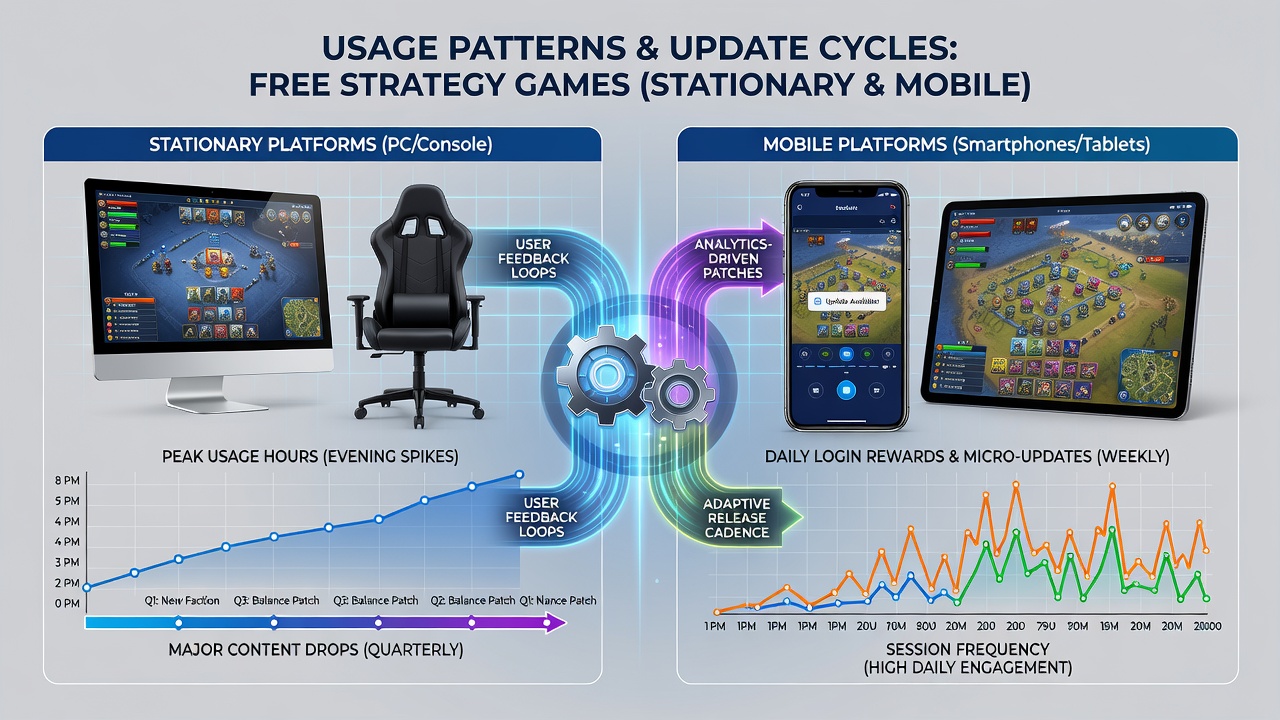
Free strategy titles on stationary and mobile platforms exhibit update cycles that align closely with aggregated usage data from player bases, and developers monitor session lengths, retention rates, and cross-device transitions to determine patch timing and feature priorities. Data from multiple platform providers indicates that peaks in concurrent users on desktop systems often precede mobile-focused adjustments by several weeks, creating a staggered release pattern observed across many free-to-play releases in 2025 and into 2026.
Stationary Platform Trends Shape Initial Development Focus
Stationary systems such as Windows and macOS installations record extended play sessions during evening hours, with strategy enthusiasts frequently completing multiple turns or matches in single sittings, and telemetry collected by distribution services shows these patterns prompt developers to prioritize balance patches and new map additions first for desktop clients. Researchers tracking download archives note that titles with strong desktop engagement see core mechanic refinements deployed within 14 to 21 days of identified usage spikes, while mobile versions receive parallel updates only after compatibility testing concludes.
Mobile Engagement Drives Rapid Iteration Loops
Portable devices capture shorter but more frequent interactions throughout the day, particularly during commutes and breaks, and figures from app analytics platforms reveal that strategy games on iOS and Android accumulate higher daily active user counts in these fragmented windows. This distribution leads publishers to release smaller content drops and bug fixes targeted at touch controls and battery optimization on a weekly cadence in many cases, with backend data streams confirming that mobile retention drops trigger immediate hotfixes before desktop teams incorporate the same adjustments.
Cross-Platform Data Integration Influences Scheduling
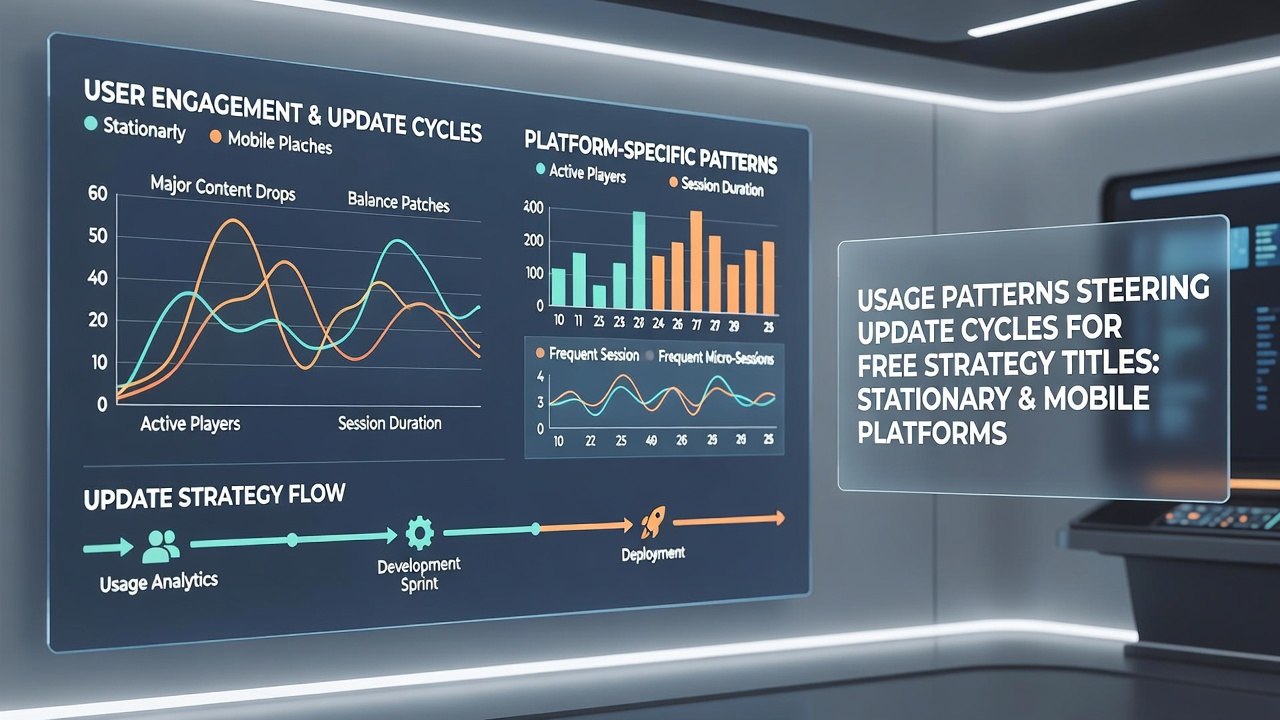
Integrated tracking systems combine metrics from both environments to generate unified models of player progression, and these models highlight when users switch between devices mid-campaign or abandon sessions on one platform while continuing on another. Development teams at several studios have adopted automated dashboards that flag divergence points in completion rates, allowing update cycles to synchronize major expansions rather than maintain separate roadmaps. One documented case from early 2026 involved a popular free tactics title that aligned its July content refresh across platforms after observing a 37 percent increase in cross-device logins during the preceding quarter.
July 2026 Observations and Industry Benchmarks
Throughout July 2026 multiple free strategy releases incorporated mid-cycle patches informed by summer usage dips on stationary hardware paired with sustained mobile activity, and reports compiled by regional industry groups documented these adjustments extending average session times by measurable margins. Academic analyses from European research institutions further illustrate how seasonal shifts in player availability steer the frequency of server-side tweaks versus client-side feature additions, producing predictable rhythms that both developers and players have come to anticipate.
Examples of Pattern-Driven Releases
Take one widely distributed empire-building game that adjusted its resource generation formulas in response to aggregated mobile data showing repeated short-session drop-offs, while desktop players received the same economy changes bundled into a larger July expansion. Another instance involved a turn-based tactics title where community forums logged complaints about load times on tablets, prompting a targeted optimization wave that reached stationary versions shortly afterward once usage logs confirmed the issue affected both device classes. These sequences demonstrate how raw telemetry translates into concrete scheduling decisions without reliance on subjective feedback alone.
Conclusion
Usage patterns continue to dictate the cadence and scope of updates for free strategy titles operating across stationary and mobile platforms, with platform-specific session data guiding the order and scale of changes deployed by development teams. Continued collection of cross-device metrics supports increasingly precise alignment of content releases, and external reports from organizations such as the Entertainment Software Association along with studies published by Canadian academic centers provide ongoing benchmarks for these dynamics. The result remains a data-led process that maintains consistency between environments while responding to observable player behavior across hardware types.