Backend Feedback Loops: User Contributions Refining Progression Systems in Free Cross-Device Action and Puzzle Games
Written by Ines Krause · Aug 11, 2026
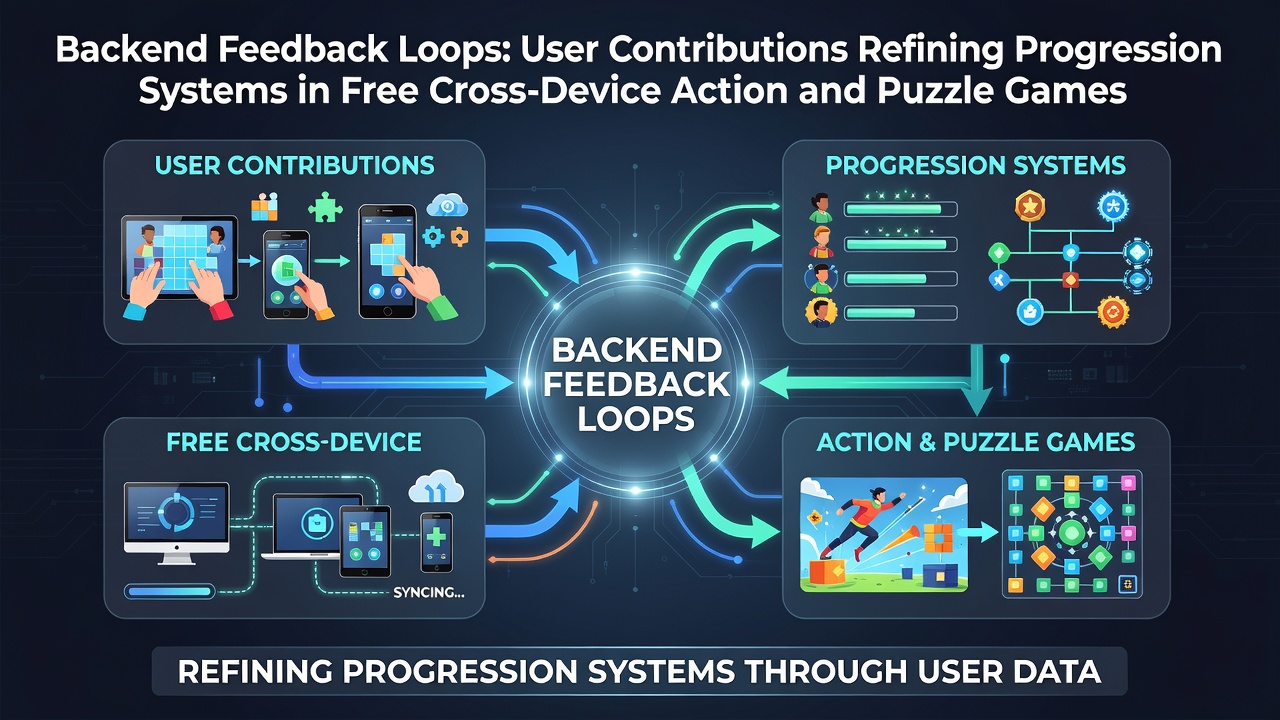
Backend Feedback Loops: User Contributions Refining Progression Systems in Free Cross-Device Action and Puzzle Games
Backend feedback loops operate through continuous data collection from player interactions in free action and puzzle games that run across PC and mobile platforms, and these systems allow user contributions to shape progression mechanics over time. Developers implement server-side tracking that logs completion rates, failure points, and time spent on specific challenges, while aggregated information feeds into algorithms that adjust level difficulty and reward structures. In August 2026 reports from industry monitors highlighted how such loops have expanded in freeware titles where players switch seamlessly between devices during single sessions.
Data Collection Mechanisms in Cross-Platform Environments
Free games in the action and puzzle genres rely on unified accounts that sync progress across hardware, and backend servers capture inputs from both touch controls on mobile and keyboard-mouse setups on desktop. This synchronization generates datasets that reveal device-specific patterns, such as higher retry rates on smaller screens during precision-based puzzle segments or faster action sequences on larger displays. Researchers at institutions like the University of Melbourne have documented how these streams inform iterative updates, with one study noting that progression tweaks based on multi-device data reduced player drop-off by measurable margins in sampled titles.
Player contributions extend beyond passive play data to include community-submitted level designs and balance suggestions that developers integrate through moderated channels. These inputs undergo validation against existing telemetry before incorporation, ensuring that changes align with observed behaviors across user bases. Observers note that in action-puzzle hybrids, such refinements often target resource gating systems, where energy or currency accumulation rates shift according to aggregate session lengths reported from varied regions.
Progression System Adjustments Driven by User Inputs
Progression mechanics evolve when backend analysis identifies bottlenecks that affect retention, and teams apply targeted modifications like altered enemy spawn rates in action phases or rearranged puzzle elements to maintain engagement. Data indicates that free cross-device titles see frequent updates in August 2026, with patches addressing imbalances uncovered through player telemetry. For instance, a puzzle sequence that proves disproportionately difficult on mobile might receive visual cues or timing adjustments derived from aggregated failure logs.
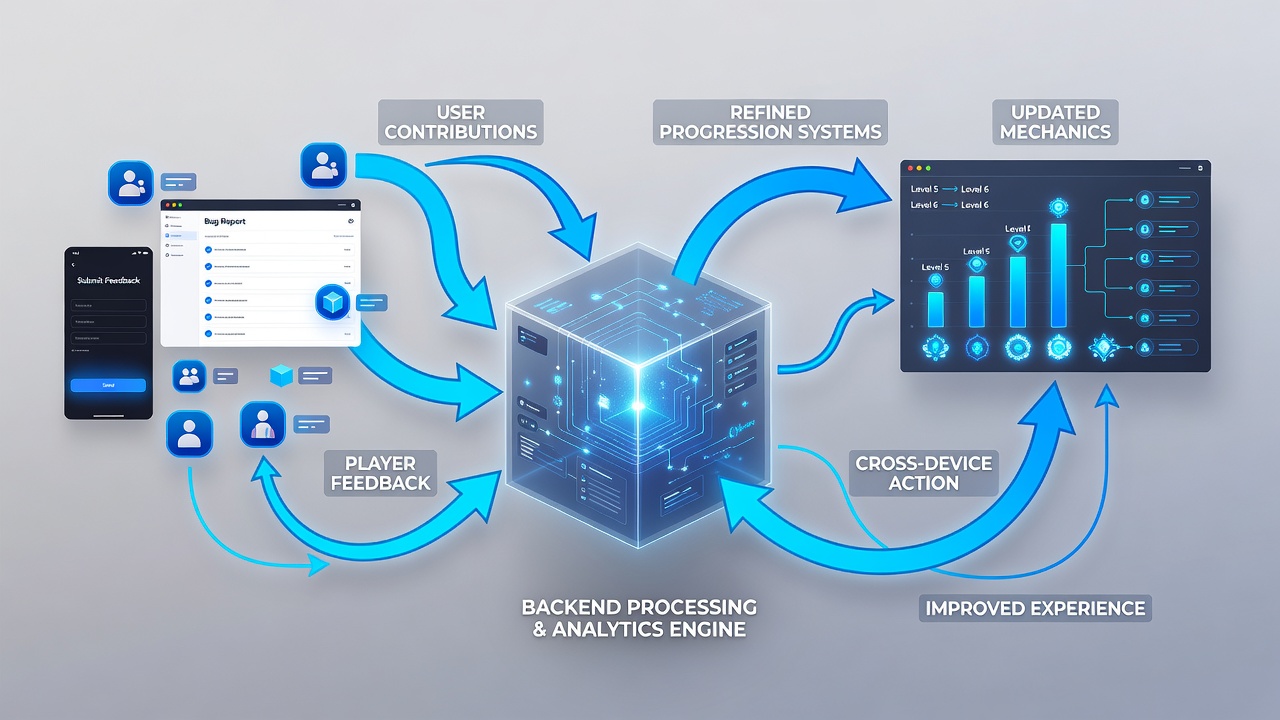
Those who analyze these systems point out that user-generated content, such as custom maps shared within game ecosystems, provides additional layers of feedback. When integrated into official rotations, these elements undergo scaling to fit core progression paths, and backend tools measure their impact on overall completion statistics. The Entertainment Software Association has tracked similar dynamics in annual reports, showing increased reliance on community data for free-to-play model sustainability.
Integration of Action and Puzzle Elements Across Devices
Action sequences in these games often interweave with puzzle solving, requiring quick reflexes followed by logical deductions, and backend loops refine the transitions between these modes based on cross-device performance metrics. Players who alternate between platforms contribute data that highlights friction points, such as control scheme inconsistencies that slow progression. Adjustments then emerge through patches that recalibrate timing windows or hint systems to accommodate varied input methods while preserving challenge integrity.
Studies from European research networks, including those affiliated with the University of Helsinki, reveal patterns where feedback loops enhance hybrid gameplay by prioritizing elements that perform consistently across hardware. In free titles, this process supports ongoing evolution without direct monetization barriers, as refinements draw from voluntary play sessions and shared archives rather than paid features alone.
Examples from Recent Freeware Releases
Take one case where a free action-puzzle title updated its resource collection mechanics after backend analysis showed mobile users advancing slower through early stages compared to PC counterparts, and developers responded with device-aware scaling that equalized progression speeds. Another instance involved community-submitted puzzle variants that, once vetted, altered mid-game difficulty spikes in strategy hybrids, leading to extended session times documented in post-update telemetry. Such examples illustrate how user contributions translate into tangible system changes without disrupting the free access model.
Additional refinements appear in games that incorporate real-time adaptation, where backend scripts detect emerging trends like repeated use of specific tactics and introduce counter-elements to maintain balance. These shifts occur through automated pipelines that flag anomalies for human review before deployment, ensuring stability across device ecosystems.
Conclusion
Backend feedback loops continue to shape progression in free cross-device action and puzzle games by channeling user contributions into data-driven updates, and this process supports sustained engagement through iterative refinements. Evidence from industry and academic sources confirms the role of aggregated telemetry in guiding adjustments that span platforms and genres, with developments tracked through 2026 highlighting ongoing integration of community inputs. The mechanisms described operate within established frameworks that prioritize measurable outcomes from player interactions across hardware setups.